Entryways carry wet paws, open doors, deliveries, visitors, and outdoor excitement. A few physical changes can support better behavior without adding commands. By the end, you will have a small setup or routine you can repeat, observe, and adjust without pushing your pet through discomfort.
Complete six short steps in order. Keep the environment stable, watch your pet's response, and stop at the last version that still feels easy.
Design the setup
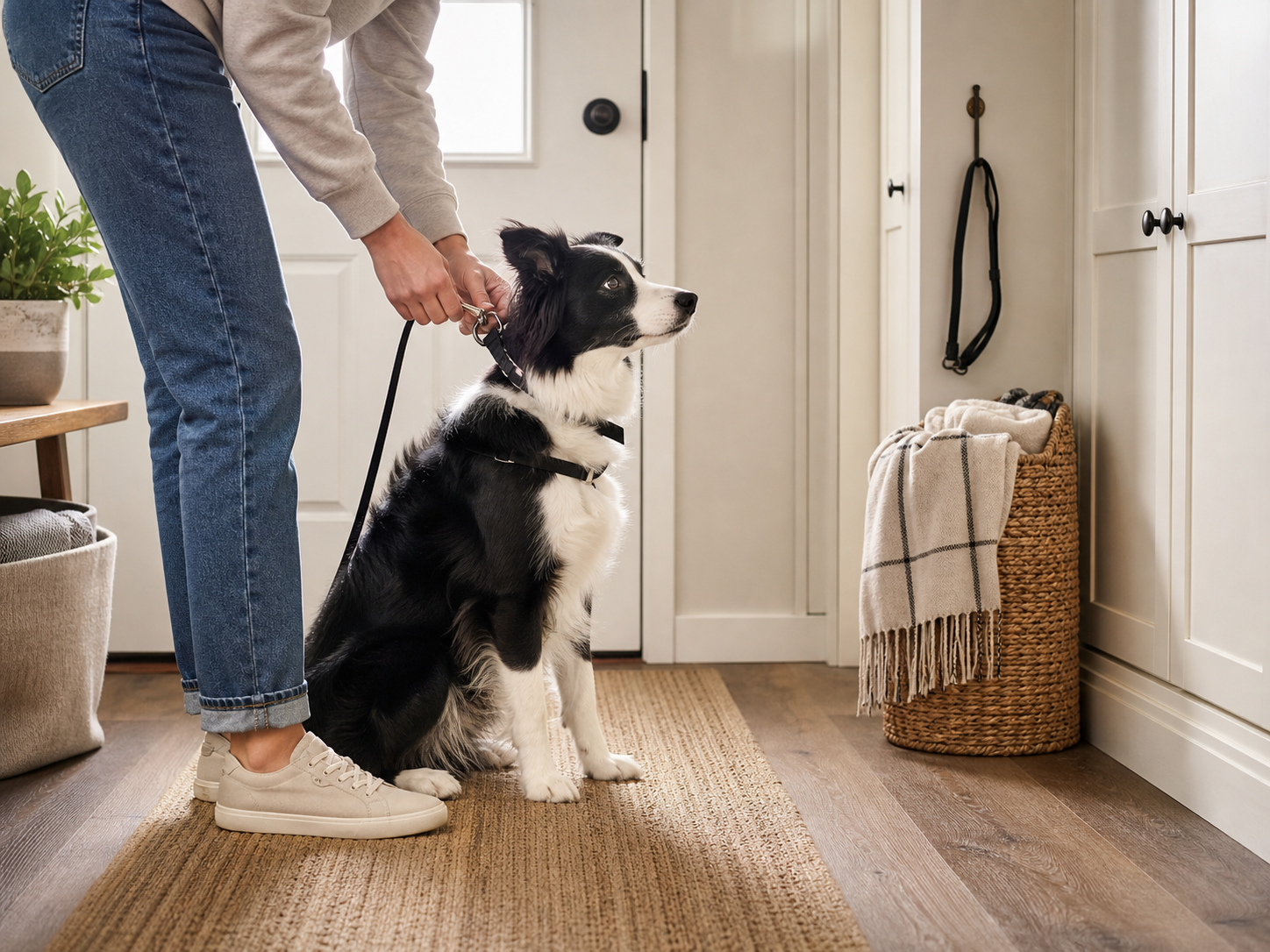
Add a washable nonslip runner from the door to the place where equipment comes off.
Inspect the environment from floor level and follow the routes your pet actually uses. Human eye level misses cables, gaps, sharp edges, and unstable objects.
Did you change only one meaningful variable during this attempt?
Store leads and bags above pet height but within adult reach, with a backup lead ready for damaged or wet gear.
Remove the hazard before trying to teach avoidance. Management provides immediate safety while habits and supervision develop.
Can you identify an obvious stopping point before discomfort or frustration appears?
Put it into everyday use
Use a properly installed gate or secondary barrier when opening directly onto traffic or shared hallways.
Check whether the new arrangement blocks food, water, litter, rest, or retreat. A safety change should not create resource conflict.
Does the setup still provide easy access to rest, water, food, toileting, and retreat?
Keep a towel, paw-safe rinse, and sealed waste container nearby without blocking the walking path.
Test gates, lids, screens, storage, and furniture under realistic pressure. A visual barrier is not useful if it shifts, tips, or leaves a reachable gap.
Would a veterinarian or qualified behavior professional have enough observations to understand the pattern?
Keep it working
Give the dog a defined waiting spot away from the doorbell zone and rehearse it during quiet times.
Introduce the changed room calmly and watch movement rather than luring the pet past uncertainty. Give them time to map the new paths.
Can your pet pause, move away, and return without being guided or restrained?
Check hooks, gates, flooring edges, and door closers regularly; a routine depends on hardware continuing to work.
Repeat the audit after growth, mobility changes, a move, new furniture, or a new animal. Pet-proofing is a maintenance routine, not a one-time event.
Is the successful version written clearly enough for another household member to repeat?
Common mistakes
- Relying on verbal correction while leaving the physical hazard accessible.
- Installing barriers that also block safe routes to rest or essential resources.
- Completing one audit and never reviewing the home after circumstances change.
Complete the lesson
Use one ordinary situation from your own home and make a short observation record for “How to Create a Dog-Friendly Entryway.”
- Prepare the easiest safe version before inviting your pet to participate.
- Complete only the first two steps and record body language, appetite, movement, or recovery.
- Repeat on another day before increasing difficulty.
- Write one sentence describing what you will keep, simplify, or ask a professional about.
Health and safety note
Petinya provides general educational information. Sudden behavior change, pain, breathing difficulty, collapse, injury, inability to eat or drink, urinary trouble, or persistent distress needs prompt professional veterinary advice.
Key takeaway
Design the doorway for safe arrivals: traction, lead storage, wiping supplies, barriers, and enough room to pause before the home opens up. Keep the environment predictable, let your pet communicate, and choose changes small enough that both of you can repeat them. Clear observations will always be more useful than trying to meet someone else's timeline.