The best travel kit reduces last-minute substitutions. A familiar bowl, blanket, and walk schedule can matter more than buying specialized gear. By the end, you will have a small setup or routine you can repeat, observe, and adjust without pushing your pet through discomfort.
Complete six short steps in order. Keep the environment stable, watch your pet's response, and stop at the last version that still feels easy.
What to prepare
Confirm identification details and carry a recent photo, emergency contact, veterinarian information, and any destination requirements.
Begin where the dog can notice the situation and still eat, move, sniff, or respond normally. Distance is part of the lesson, not a failure.
Did breathing, posture, appetite, movement, or play remain close to the pet's normal baseline?
Pack the usual food in measured portions plus a small delay allowance, keeping labels and medication instructions intact.
Use one clear cue or environmental setup at a time. Repeating several words usually adds noise without making the expected action clearer.
What happened immediately before the response, and what changed when difficulty was reduced?
Run the check
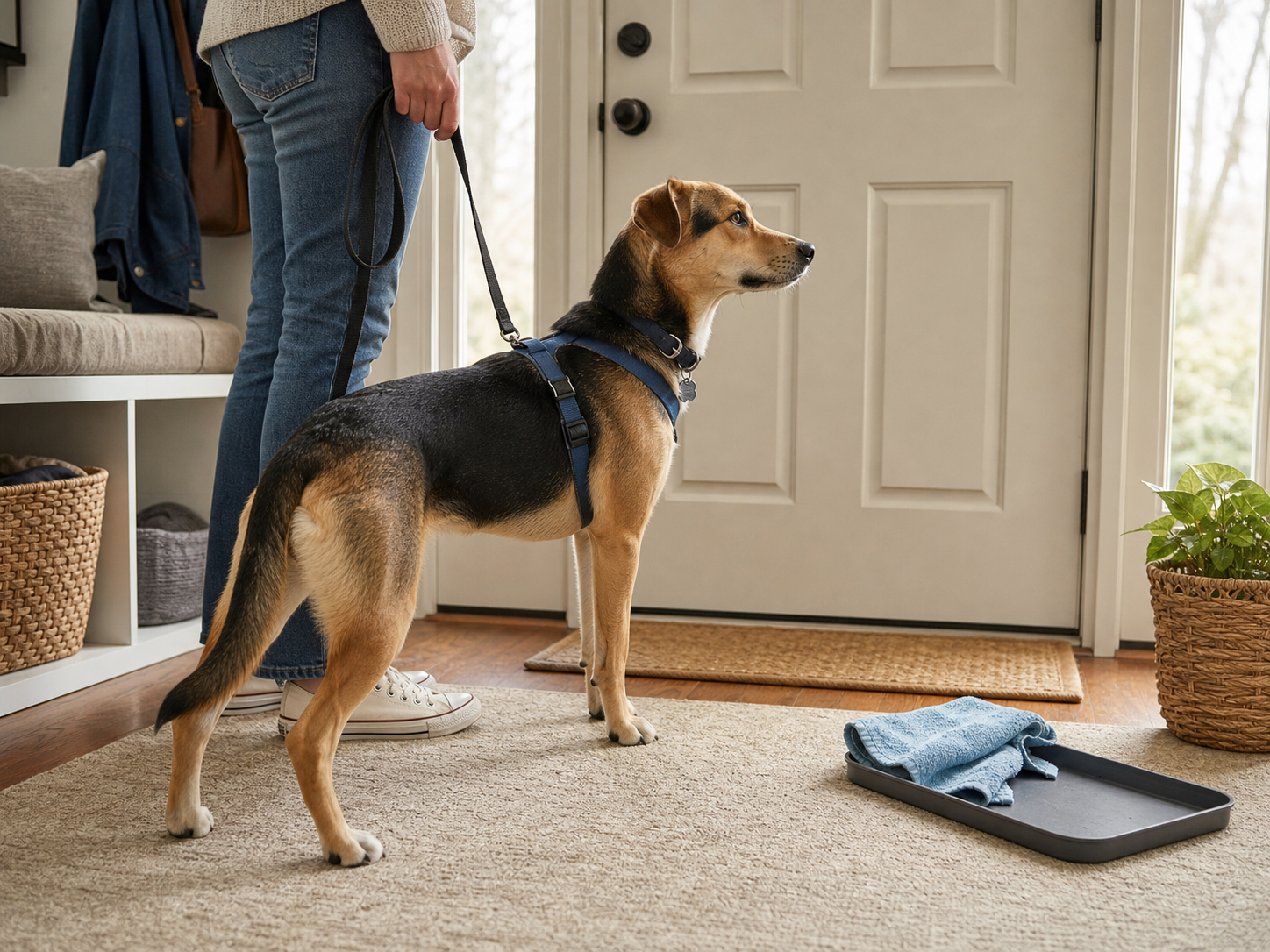
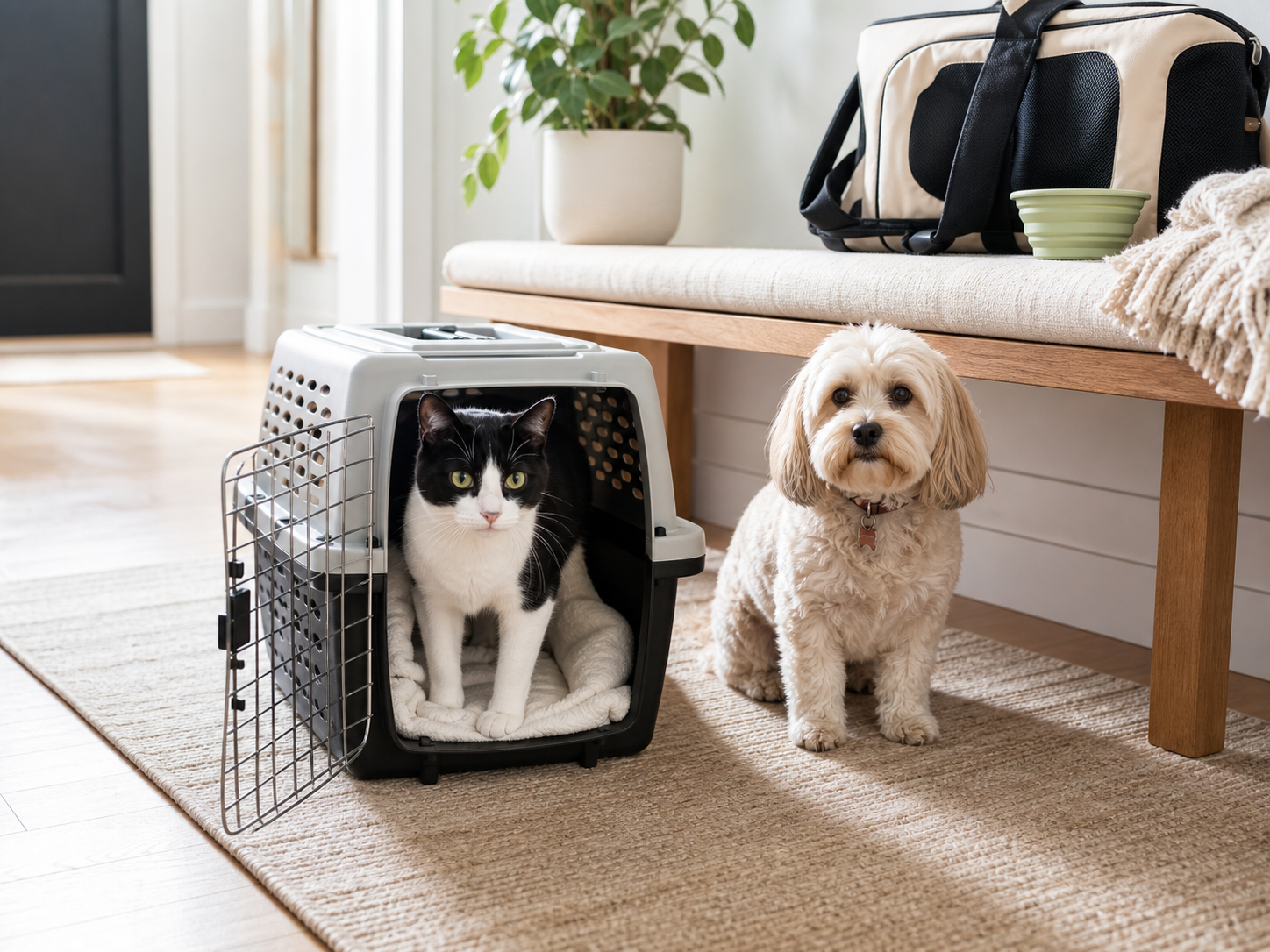
Bring a secure lead, backup attachment, waste bags, towel, water, bowls, and a familiar resting surface.
Reward the smallest useful behavior early, before excitement or worry becomes difficult to interrupt. Timing matters more than asking for a perfect repetition.
Did you change only one meaningful variable during this attempt?
Use a safe travel restraint or secured crate appropriate to the vehicle; rehearse shorter journeys before the overnight trip.
Pause between attempts and watch how quickly normal breathing, movement, and attention return. Recovery is an important measure of difficulty.
Can you identify an obvious stopping point before discomfort or frustration appears?
Make it sustainable
Plan toilet and decompression breaks away from crowded entrances and unknown dogs.
Practice in a second easy location only after the first setup feels familiar. Dogs do not automatically generalize a skill to every room or street.
Does the setup still provide easy access to rest, water, food, toileting, and retreat?
Research the nearest veterinary service before departure rather than during an emergency.
Finish with a behavior the dog already understands and note the conditions that worked. A clean ending protects confidence for the next session.
Would a veterinarian or qualified behavior professional have enough observations to understand the pattern?
Common mistakes
- Practicing too close to a distraction for the dog to think or recover.
- Repeating cues while changing body position, reward timing, and criteria at the same time.
- Treating slower progress as stubbornness instead of reducing difficulty.
Complete the lesson
Use one ordinary situation from your own home and make a short observation record for “What to Pack for Your Dog's First Overnight Trip.”
- Prepare the easiest safe version before inviting your pet to participate.
- Complete only the first two steps and record body language, appetite, movement, or recovery.
- Repeat on another day before increasing difficulty.
- Write one sentence describing what you will keep, simplify, or ask a professional about.
Health and safety note
Petinya provides general educational information. Sudden behavior change, pain, breathing difficulty, collapse, injury, inability to eat or drink, urinary trouble, or persistent distress needs prompt professional veterinary advice.
Key takeaway
Pack familiar routines before novelty: identification, usual food, medication, sleep setup, lead, cleaning supplies, and clear records. Keep the environment predictable, let your pet communicate, and choose changes small enough that both of you can repeat them. Clear observations will always be more useful than trying to meet someone else's timeline.