Habituation happens only when the dog can recover. Repeated full-volume exposure that causes panic is flooding, not practice. By the end, you will have a small setup or routine you can repeat, observe, and adjust without pushing your pet through discomfort.
Complete six short steps in order. Keep the environment stable, watch your pet's response, and stop at the last version that still feels easy.
Read the moment
List the exact sounds, locations, distances, and body-language changes so you know what you are actually training.
Define the behavior in observable terms before trying to change it. Describe what the body did, where it happened, and what occurred immediately before and after.
What happened immediately before the response, and what changed when difficulty was reduced?
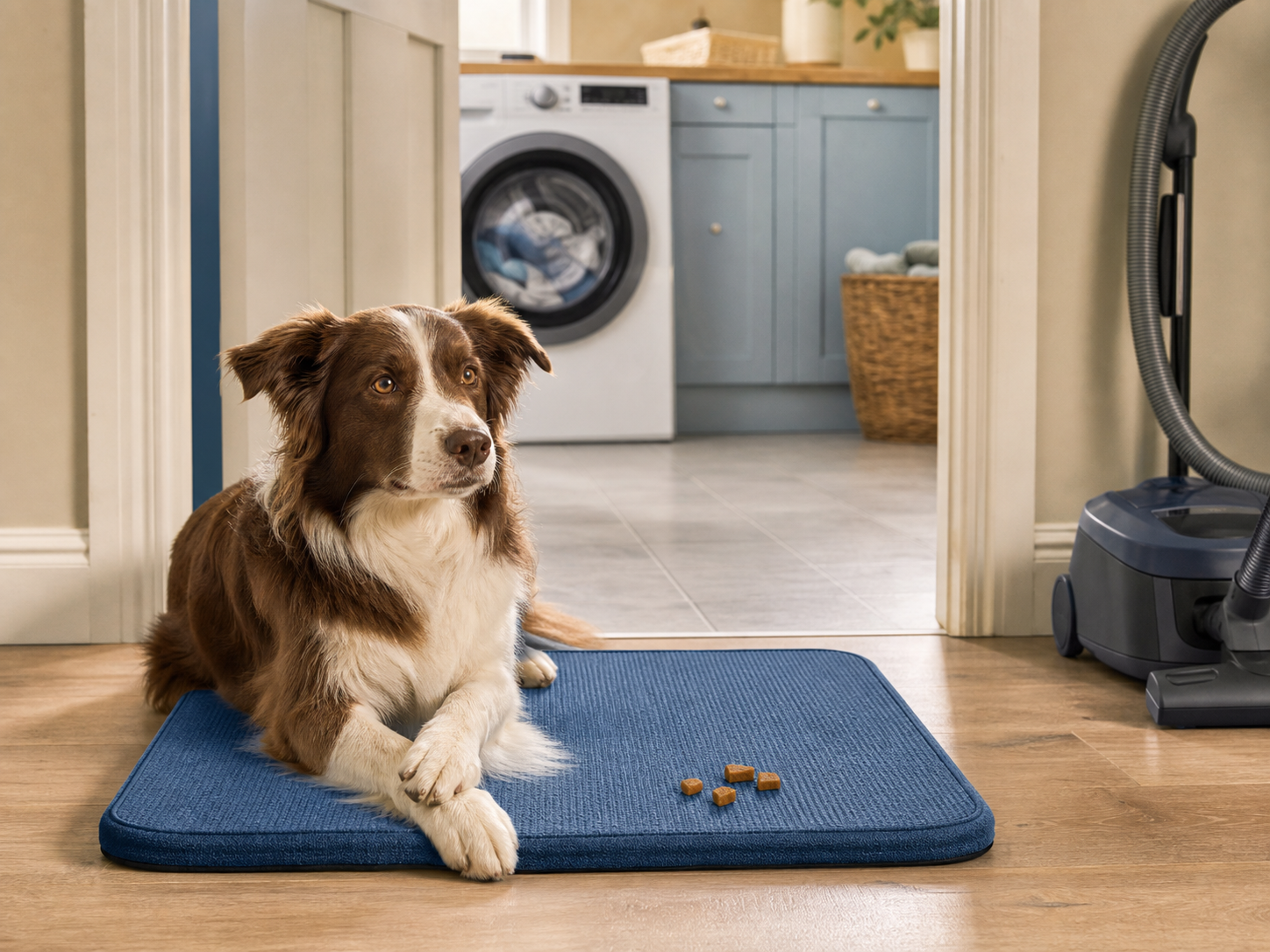
Create a quiet retreat behind a closed door with bedding and background sound before using noisy equipment.
Lower difficulty until your pet can stay engaged without frantic movement, freezing, hiding, or repeated attempts to escape.
Did you change only one meaningful variable during this attempt?
Respond with less pressure
Start with the appliance visible but off, rewarding relaxed investigation from a distance.
Reinforce the alternative you actually want, such as moving to a mat, sniffing, scratching an approved surface, or taking distance.
Can you identify an obvious stopping point before discomfort or frustration appears?
Use recordings or very brief low-intensity sound only below the point where the dog freezes, flees, barks continuously, or refuses food.
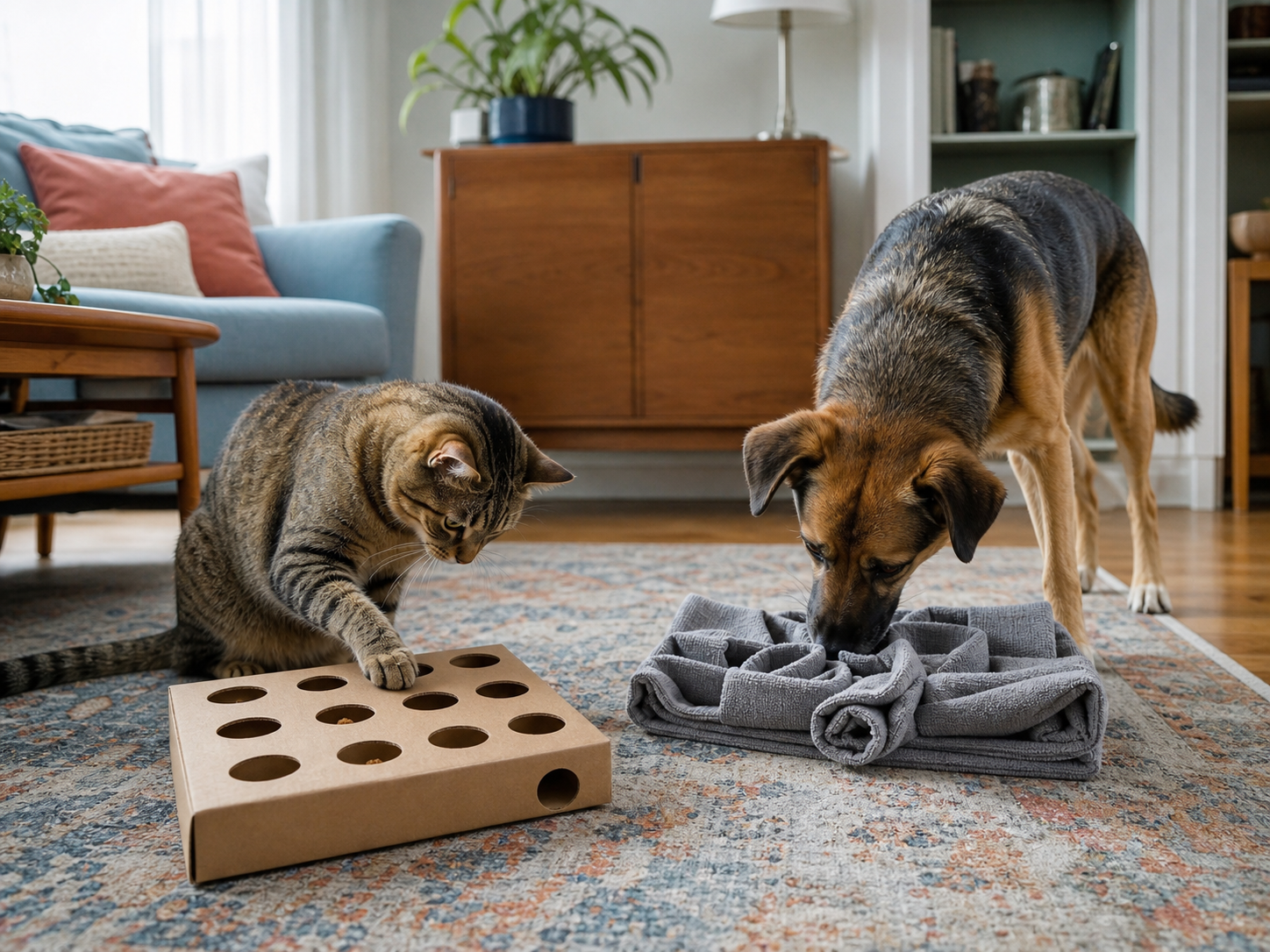
Keep enrichment easy enough to solve. Frustration, guarding, or escalating arousal means the activity needs to be simplified or stopped.
Does the setup still provide easy access to rest, water, food, toileting, and retreat?
Build trust over time
Pair sound with choice: the dog can leave, approach, or stay behind a barrier without being lured closer.
Repeat in short sessions across several ordinary days and look for a trend. One unusually good or difficult attempt is not the full pattern.
Would a veterinarian or qualified behavior professional have enough observations to understand the pattern?
For severe fear, panic, destructive escape, or worsening reactions, work with a veterinarian and qualified behavior professional.
If behavior changes suddenly or affects eating, sleep, movement, elimination, or safety, involve a veterinarian before treating it as a training issue.
Can your pet pause, move away, and return without being guided or restrained?
Common mistakes
- Using labels such as stubborn or jealous instead of recording observable behavior.
- Making enrichment so difficult that it produces frustration rather than useful engagement.
- Assuming a sudden behavior change is purely a training problem.
Complete the lesson
Use one ordinary situation from your own home and make a short observation record for “Helping a Dog Feel Safer Around Household Sounds.”
- Prepare the easiest safe version before inviting your pet to participate.
- Complete only the first two steps and record body language, appetite, movement, or recovery.
- Repeat on another day before increasing difficulty.
- Write one sentence describing what you will keep, simplify, or ask a professional about.
Health and safety note
Petinya provides general educational information. Sudden behavior change, pain, breathing difficulty, collapse, injury, inability to eat or drink, urinary trouble, or persistent distress needs prompt professional veterinary advice.
Key takeaway
Reduce exposure, create a retreat, and pair very low-intensity sound with safety instead of forcing a dog to endure the vacuum or blender. Keep the environment predictable, let your pet communicate, and choose changes small enough that both of you can repeat them. Clear observations will always be more useful than trying to meet someone else's timeline.